Link via Sharon Needles.
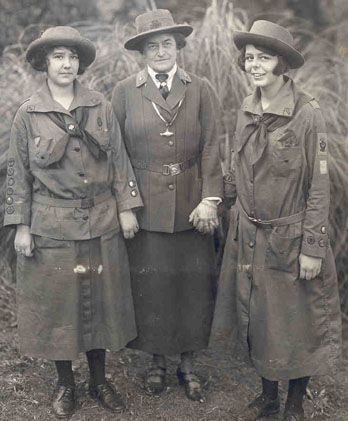
I didn’t know much about the Girl Scouts before all the recent controversy. I bought cookies, and that’s pretty much it. (Mostly Thin Mints, for those of you who are curious.) Then comes all this controversy: first that rotten little bigot that wanted to instigate a boycott because the GS embrace transgender members, Indiana State Rep. Bob Morris accusing the Girl Scouts of promoting abortion and homosexuality, that they distribute pro-abortion sex pamphlets, and now this nonsense from the Cat’lics. So much nonsense and bullshit.
Well, I’ve learned a lot about the Girl Scouts ever since the screeching started. I’ve learned that they’re inclusive, open-minded, and philanthropic. I’ve learned that they really do a lot of good for their members and their communities.
Thank you, lunatics and bigots. I never would have bothered to research the Girl Scouts if you hadn’t bleated out your histrionics. I look forward to becoming a volunteer when I sign Lilith up to join the Daisies.
[ mirror ]

In Colombia, the fossil of a gargantuan snake has stunned scientists, forcing them to rethink the nature of prehistoric life
In the lowland tropics of northern Colombia, 60 miles from the Caribbean coast, Cerrejón is an empty, forbidding, seemingly endless horizon of dusty outback, stripped of vegetation and crisscrossed with dirt roads that lead to enormous pits 15 miles in circumference. It is one of the world’s largest coal operations, covering an area larger than Washington, D.C. and employing some 10,000 workers. The multinational corporation that runs the mine, Carbones del Cerrejón Limited, extracted 31.5 million tons of coal last year alone.
Cerrejón also happens to be one of the world’s richest, most important fossil deposits, providing scientists with a unique snapshot of the geological moment when the dinosaurs had just disappeared and a new environment was emerging. “Cerrejón is the best, and probably the only, window on a complete ancient tropical ecosystem anywhere in the world,” said Carlos Jaramillo, a paleontologist at the Smithsonian Tropical Research Institute. “The plants, the animals, everything. We have it all, and you can’t find it anywhere else in the tropics.”
Fifty-eight million years ago, a few million years after the fall of the dinosaurs, Cerrejón was an immense, swampy jungle where everything was hotter, wetter and bigger than it is today. The trees had wider leaves, indicating greater precipitation—more than 150 inches of rain per year, compared with 80 inches for the Amazon now. Mean temperatures may have hovered in the mid- to high-80s Fahrenheit or higher. Deep water from north-flowing rivers swirled around stands of palm trees, hardwoods, occasional hummocks of earth and decaying vegetation. Mud from the flood plain periodically coated, covered and compressed the dead leaves, branches and animal carcasses in steaming layers of decomposing muck dozens of feet thick.
The river basin held turtles with shells twice the size of manhole covers and crocodile kin—at least three different species—more than a dozen feet long. And there were seven-foot-long lungfish, two to three times the size of their modern Amazon cousins.
The lord of this jungle was a truly spectacular creature—a snake more than 40 feet long and weighing more than a ton. This giant serpent looked something like a modern-day boa constrictor, but behaved more like today’s water-dwelling anaconda. It was a swamp denizen and a fearsome predator, able to eat any animal that caught its eye. The thickest part of its body would be nearly as high as a man’s waist. Scientists call it Titanoboa cerrejonensis…
[ read on ]

[ source ]
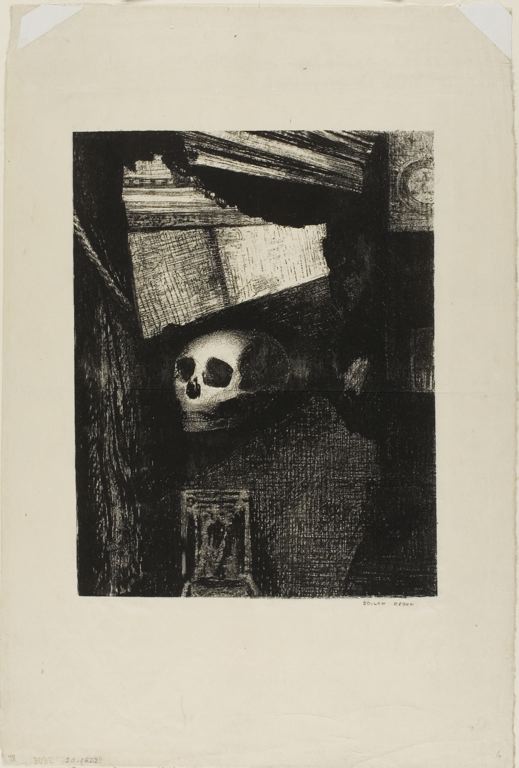
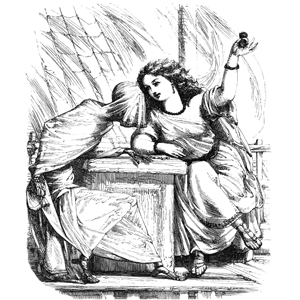
Illustration for Edmond Picard’s Le Juré, 1887.


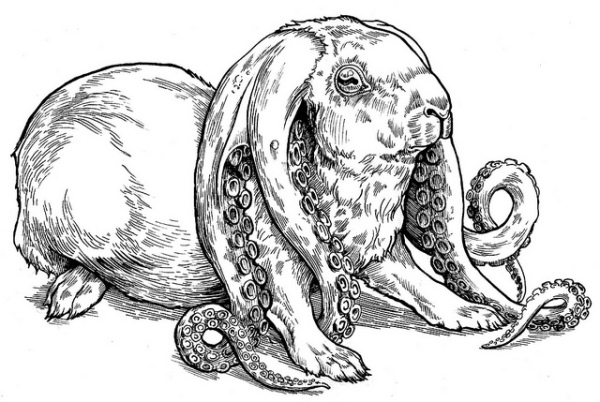
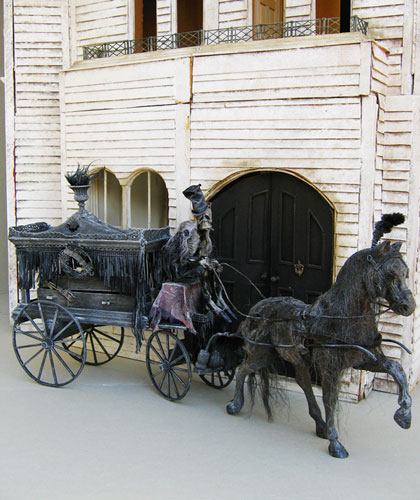
No clue who to credit for this.