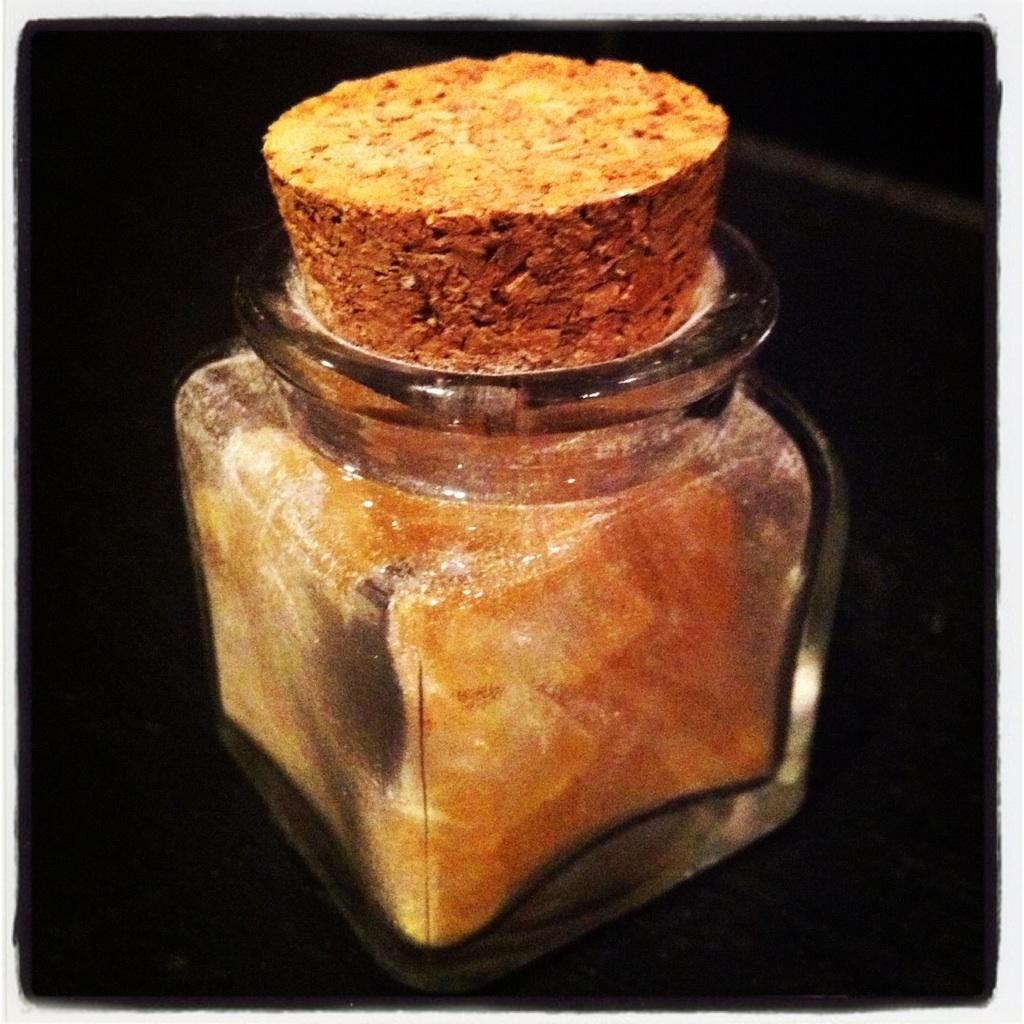
Colophony (Pix græca, rosin) is a product of conifers, primarily pine trees. In the esoteric arts, it is used primarily for purification rituals, binding spells, and rites that bolster courage and strength, and it is of significant importance in Egyptian magick, as it was used in the embalming process. The essential oil is usually steam distilled from the heartwood.
Colophony is tremendously useful, and is has a wide range of applications within the fields of music, dance, construction, visual art, electronics, medicine, cosmetics, and prestidigitation.
It is an effective tool in the Art of War. Roger Bacon provides instructions for creating Flying Fire with colophony:
Flying Fire (ignis volatilis in aere) may be obtained in the following manner: take one part of colophony, the same of sulphur, and two parts saltpeter.
A fourteenth century recipe for Greek fire called for a mixture containing colophony, sulphur, and Roman glassa to be distilled in an alembic. Bombax was then soaked in the mixture, and the resulting missile was hurled from ballista.
Conversely, it is also a tool in the Art of Healing:
A remedy for scratches taught me by the Herald to the King of France. 4 ounces of virgin wax, 4 ounces of colophony, 2 ounces of incense. Keep each thing separate; and melt the wax, and then put the incense and then the colophony, make a mixture of it and put it onto the sore place.
– Leonardo DaVinci
It can be used for dressing blisters, in drawing salves, and as a balm for bleeding piles.
Its volatile nature and its applications in warfare have scooted colophony into Fire’s jurisdiction, ruled by Mars, though some hold that it is governed by the Sol and Air.
The scent is resinous (surprise!), though a bit green.
Colophony has been known to cause contact dermatitis, and burning this resin in excess may cause occupational asthma. According to the 1888 edition of the American Journal of Pharmacy, powdered colophony may spontaneously combust. Please use caution.
Disclaimer Time! Also, please don’t try to make Greek fire or flying fire or anything else nutty with this info. I don’t want anyone using information that I provide for horrible, horrible crazytimes. I also can’t be responsible for Leonardo DaVinci’s questionable medical advice.
Merricat, said Connie, would you like a cup of tea?
Oh no, said Merricat, you’ll poison me.
Merricat, said Connie, would you like to go to sleep?
Down in the boneyard ten feet deep!
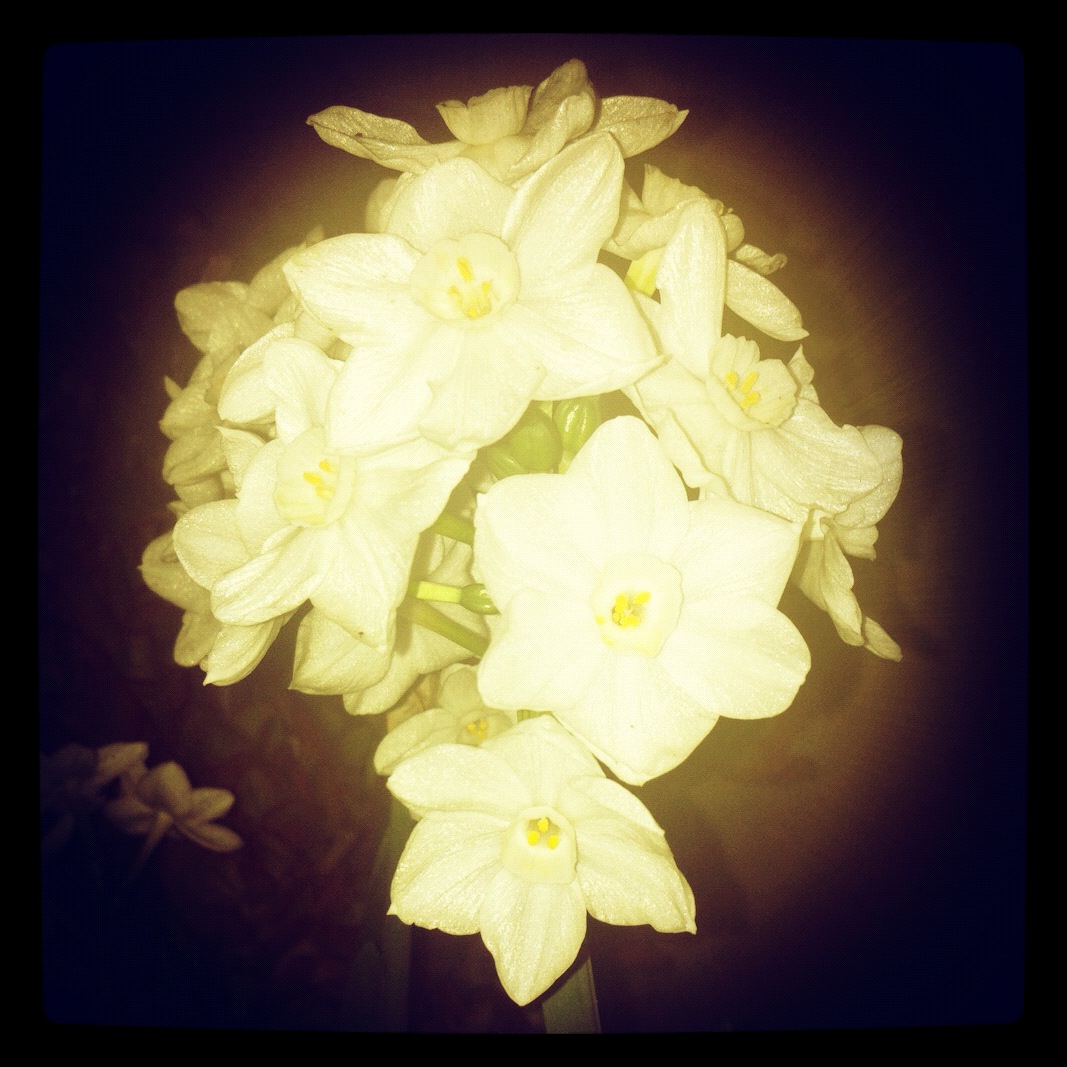
The TAL garden: narcissus at night.

Guinevere Van Seenus by Tim Walker. Dreaming of Another World, Vogue Italia, March 2011.
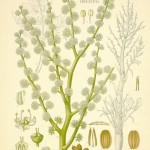
Botanical Name: Dorema ammoniacum
The plant grows to height of about 7 feet and in spring and early summer contains a milky juice. It is visited by numbers of beetles which puncture the stem and thus cause an exudation, part of which dries on the stem, the rest falling to the ground where it becomes mixed with stones and other impurities found in the gum collected by the natives. The gum resin is found in special cavities in the tissues of the stem, root and petioles of the leaves. The name of the drug is said to be derived from the Temple of Jupiter Ammon in the Libyan Desert where it was collected by the ancients. The gum resin occurs in commerce in two forms, tear ammoniacum and lump or block ammoniacum. The former alone is official in England and consists of pale yellow nodular masses varying in size from a pea to a walnut, brittle when cold but softens on warming, fractured surface, milky white or pale brown in colour. The lump ammoniacum, which is that collected from the ground, is used sometimes but is not official in medicine. The odour of the drug is slight, taste acrid and persistent.
– M. Grieve
Gum ammoniac is ruled by Jupiter (the planet), and is useful in rituals that honor Jupiter (the Sky-God), Zeus or any of his sons, Amun, or Zefs-Ammon. It is very suitable as an offering for any of these deities.
Gum ammoniac is one of the components used in an incense employed in protective magick of a Jupiterean nature: fortification of community and kingdom, benevolent rule, and just law. It can also be employed in rituals that create prosperity through expansion and as a countermeasure to Saturnian works. This resin can be burned to honor all of the archangels, but is sacred to Gabriel in particular.
It has been cited in Coptic texts adjuring the powers of the divine realm against malevolent, demonic forces, particularly during ceremonial evocation and invocation rituals:
Draw the four angels in front of the curtain of the father, while you are wearing a wreath of roses, with a branch of myrtle in your hand, with gum ammoniac in your mouth.
Offering; frankincense, storax, stacte. Nest; slay the six doves. Cinnamon; rose oil, charcoal from white wood; olive wood.
– Di alcuni manoscritti copti
Gum ammoniac is also the traditional adhesive used in gluing parchment and gilding with gold leaf.
Agrippa recommends the following recipe for Mars incense:
For Mars, take ephorbium, bedellium, gum ammoniac, the roots of both hellebores, the loadstones, and a little sulphur; and incorporate them all with the brain of a hart, the blood of a man and the blood of a black cat.
It has a pungent, peculiar aroma when burned on its own, and it sticks with ya.









Goodbye, Etta. Your songs made my soul soar and comforted my heartbreak.