Medicine chest ‘time capsule’ that reveals the exotic potions used by doctors in 1817 goes on sale
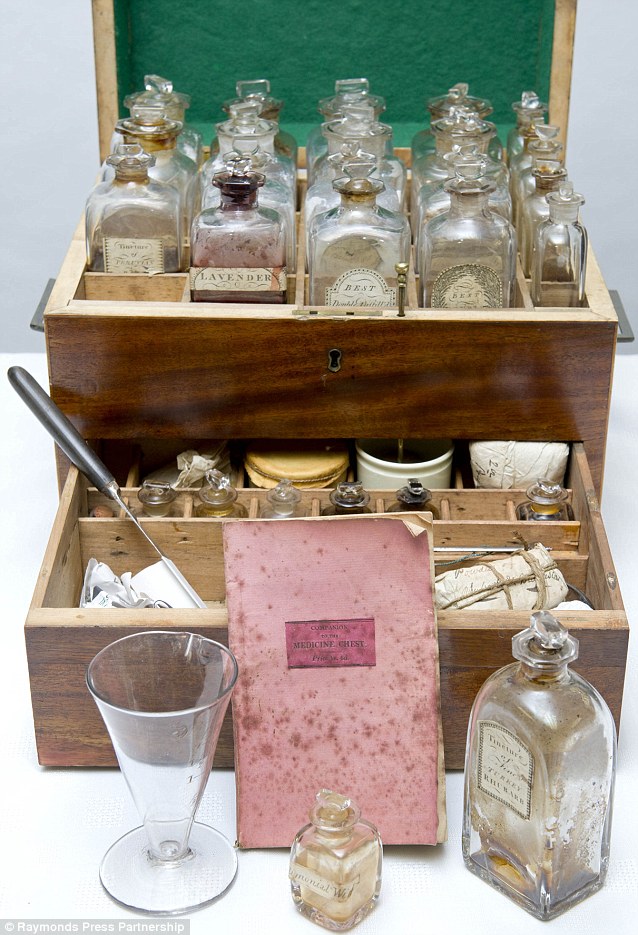
- Perfectly preserved mahogany box found at house in Derbyshire
- Comes complete with 29 bottled concoctions
- Remedies include Manna, Steers’s Opodeldoc and peppermint water
- Expected to fetch over £3,000 at auction
It contains a collection of healing potions and cure-alls unlikely to be prescribed by any GP today.
But a perfectly preserved medicine chest dating back to the reign of George III is expected to fetch more than £3,000 when it sells at auction later this week.
The mahogany box, described as a ‘medicinal time capsule’, comes complete with 29 exotically named bottled concoctions that would have been used by doctors to treat ailments such as gout, depression and indigestion.
[ read on ]
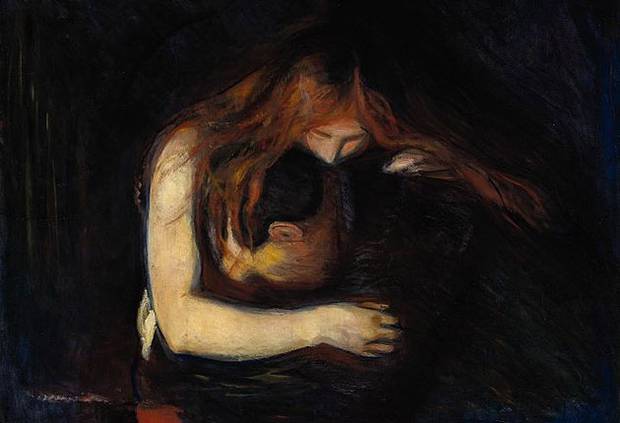
One of the most sensational and shocking images in European art, Edvard Munch’s painting of a man locked in a vampire’s tortured embrace – her molten-red hair running along his soft bare skin – created an instant outcry when unveiled a century ago.
Some believed the Norwegian artist’s anguished 1894 masterpiece, Love and Pain – since known as Vampire – to be a reference to his illicit visits to prostitutes; others interpreted it as a macabre fantasy about the death of his favourite sister. Some years later, Nazi Germany condemned it as morally “degenerate”.
Vampire has become one of Munch’s most sought-after and reproduced images, despite remaining in the hands of a private collector for the past 70 years.
The painting will go on the open market, The Independent can reveal, and is anticipated to smash the $31m (£17m) auction record for a Munch work. Vampire, which is often seen as the sister of The Scream, completed just months earlier, will be sold at a Sotheby’s auction in New York for an estimated $35m.
The painting was part of Munch’s seminal 20-work series The Frieze of Life, which included The Scream. It is the most significant version of four Vampires he completed in 1893 and 1894, and was first exhibited in 1902 in Berlin, where his works caused shock and awe.
Vampire was sold to the avid Munch collector, John Anker, in 1903, and is the only work from the original series in private hands. It was acquired by a private collection from Anker and his wife, Nini Roll, in 1934, and has since remained there – albeit loaned to the Metropolitan Museum of Art in New York until last year. Vampire has not been since in Britain since 1974. Simon Shaw, head of Impressionist and modern art at Sotheby’s in New York, said: “There have been past Munch works to be sold in recent times, such as a wonderful group of works in 2006 and a painting earlier this year, but this one is a real, knock ’em dead masterpiece.”
Vampire caused a sensation when it was unveiled, touching on turn-of-the-century fears about women’s liberation. Some critics were outraged by its perverse, almost sado-masochistic depiction of passion.
Mr Shaw added: “It was shocking to Berlin society just as it is shocking today.”
Munch, however, always insisted it was nothing more than “just a woman kissing a man on the neck”.
The work also became the basis for several pastels, woodcuts, lithographs and prints, one of which will be sold at Sotheby’s in London on 2 October, entitled Vampire II and estimated to fetch up to £400,000. The painting will be on view in London from 3 to 7 October, and then in Moscow, before it is sold in New York on 3 November.
[ verbatim source: the independent / via del howison ]
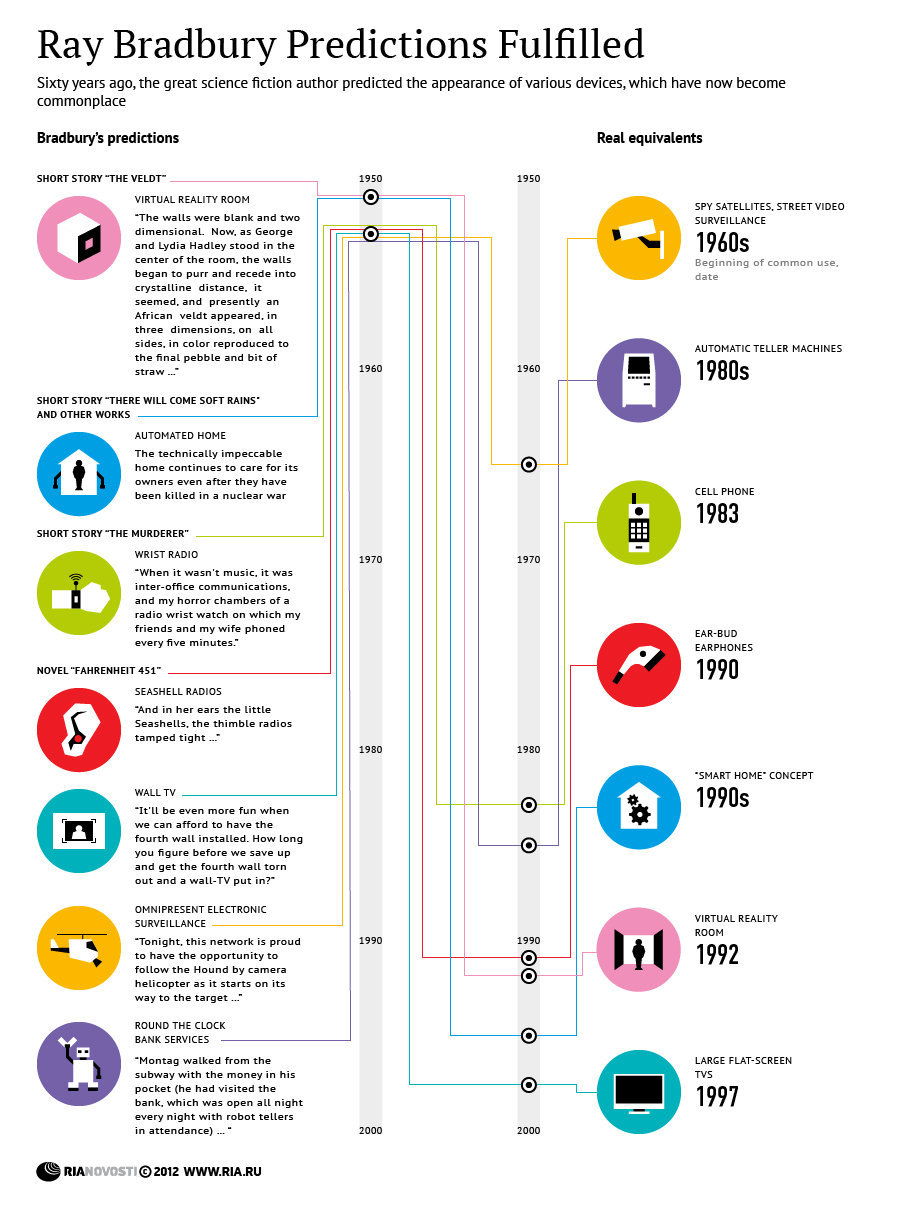
[ click to enlarge – infographic via book patrol’s tumblr feed
“But it is not enough merely to exist,” said he, “I need freedom, sunshine, and a little flower for a companion.”
THERE was once a butterfly who wished for a bride, and, as may be supposed, he wanted to choose a very pretty one from among the flowers. He glanced, with a very critical eye, at all the flower-beds, and found that the flowers were seated quietly and demurely on their stalks, just as maidens should sit before they are engaged; but there was a great number of them, and it appeared as if his search would become very wearisome. The butterfly did not like to take too much trouble, so he flew off on a visit to the daisies. The French call this flower “Marguerite,” and they say that the little daisy can prophesy. Lovers pluck off the leaves, and as they pluck each leaf, they ask a question about their lovers; thus: “Does he or she love me?—Ardently? Distractedly? Very much? A little? Not at all?” and so on. Every one speaks these words in his own language. The butterfly came also to Marguerite to inquire, but he did not pluck off her leaves; he pressed a kiss on each of them, for he thought there was always more to be done by kindness.
“Darling Marguerite daisy,” he said to her, “you are the wisest woman of all the flowers. Pray tell me which of the flowers I shall choose for my wife. Which will be my bride? When I know, I will fly directly to her, and propose.”
But Marguerite did not answer him; she was offended that he should call her a woman when she was only a girl; and there is a great difference. He asked her a second time, and then a third; but she remained dumb, and answered not a word. Then he would wait no longer, but flew away, to commence his wooing at once. It was in the early spring, when the crocus and the snowdrop were in full bloom.
“They are very pretty,” thought the butterfly; “charming little lasses; but they are rather formal.”
Then, as the young lads often do, he looked out for the elder girls. He next flew to the anemones; these were rather sour to his taste. The violet, a little too sentimental. The lime-blossoms, too small, and besides, there was such a large family of them. The apple-blossoms, though they looked like roses, bloomed to-day, but might fall off to-morrow, with the first wind that blew; and he thought that a marriage with one of them might last too short a time. The pea-blossom pleased him most of all; she was white and red, graceful and slender, and belonged to those domestic maidens who have a pretty appearance, and can yet be useful in the kitchen. He was just about to make her an offer, when, close by the maiden, he saw a pod, with a withered flower hanging at the end.
“Who is that?” he asked.
“That is my sister,” replied the pea-blossom.
“Oh, indeed; and you will be like her some day,” said he; and he flew away directly, for he felt quite shocked.
A honeysuckle hung forth from the hedge, in full bloom; but there were so many girls like her, with long faces and sallow complexions. No; he did not like her. But which one did he like?
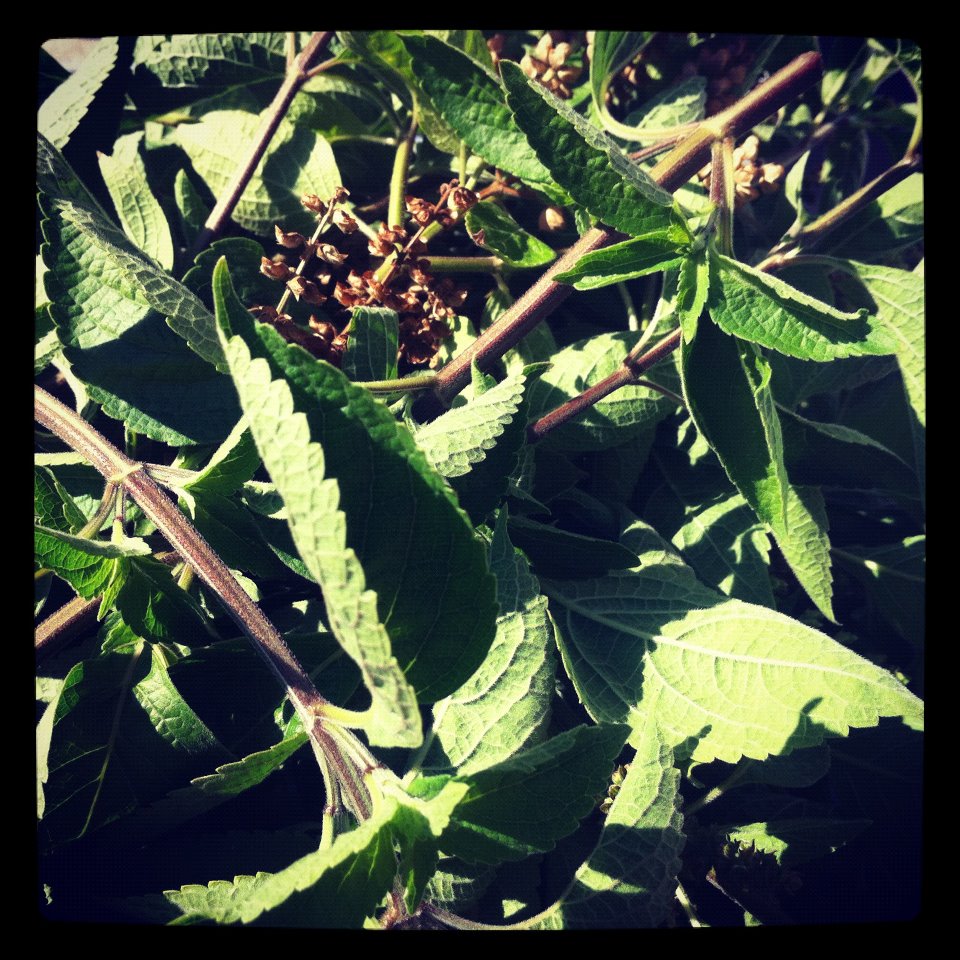
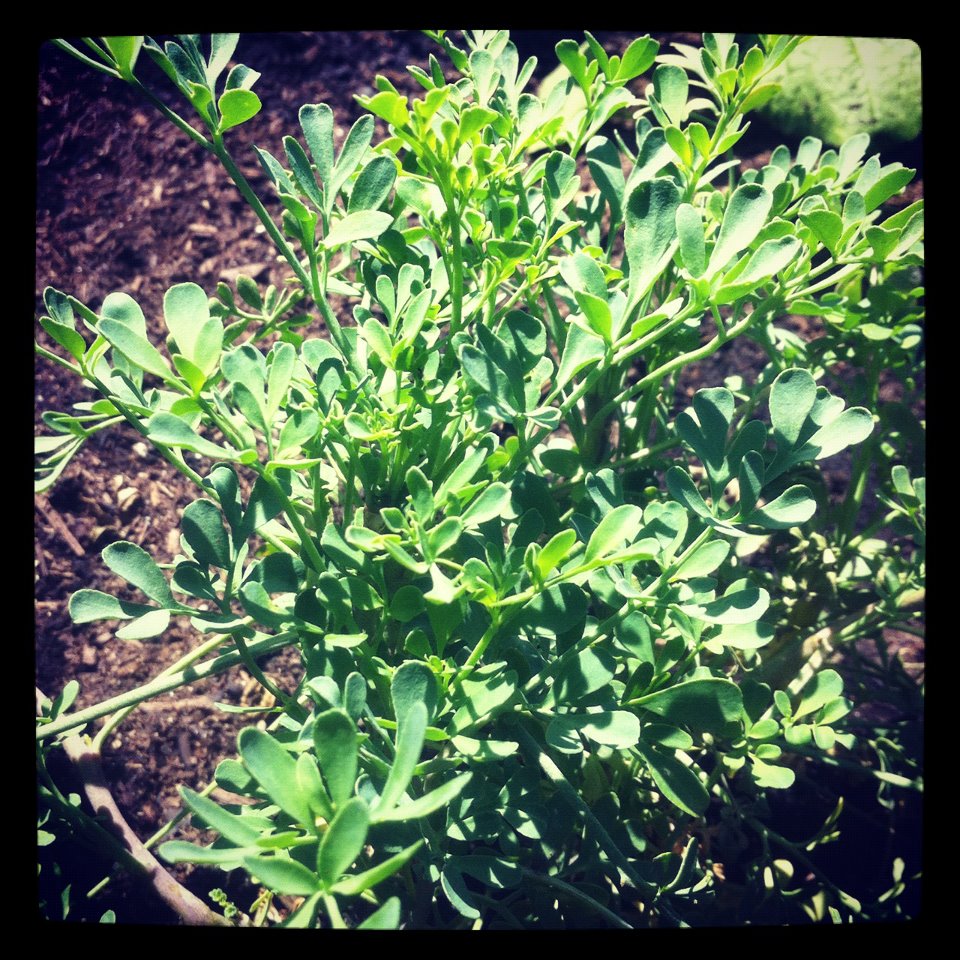
Spring went by, and summer drew towards its close; autumn came; but he had not decided. The flowers now appeared in their most gorgeous robes, but all in vain; they had not the fresh, fragrant air of youth. For the heart asks for fragrance, even when it is no longer young; and there is very little of that to be found in the dahlias or the dry chrysanthemums; therefore the butterfly turned to the mint on the ground. You know, this plant has no blossom; but it is sweetness all over,—full of fragrance from head to foot, with the scent of a flower in every leaf.
“I will take her,” said the butterfly; and he made her an offer. But the mint stood silent and stiff, as she listened to him. At last she said,—
“Friendship, if you please; nothing more. I am old, and you are old, but we may live for each other just the same; as to marrying—no; don’t let us appear ridiculous at our age.”
And so it happened that the butterfly got no wife at all. He had been too long choosing, which is always a bad plan. And the butterfly became what is called an old bachelor.
It was late in the autumn, with rainy and cloudy weather. The cold wind blew over the bowed backs of the willows, so that they creaked again. It was not the weather for flying about in summer clothes; but fortunately the butterfly was not out in it. He had got a shelter by chance. It was in a room heated by a stove, and as warm as summer. He could exist here, he said, well enough.
“But it is not enough merely to exist,” said he, “I need freedom, sunshine, and a little flower for a companion.”
Then he flew against the window-pane, and was seen and admired by those in the room, who caught him, and stuck him on a pin, in a box of curiosities. They could not do more for him.
“Now I am perched on a stalk, like the flowers,” said the butterfly. “It is not very pleasant, certainly; I should imagine it is something like being married; for here I am stuck fast.” And with this thought he consoled himself a little.
“That seems very poor consolation,” said one of the plants in the room, that grew in a pot.
“Ah,” thought the butterfly, “one can’t very well trust these plants in pots; they have too much to do with mankind.”